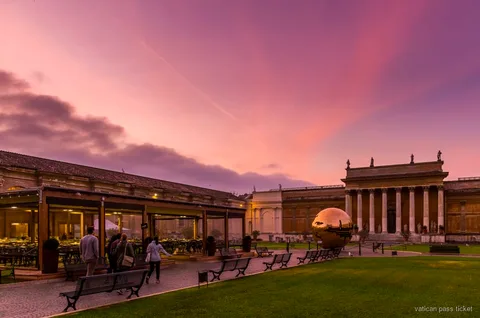
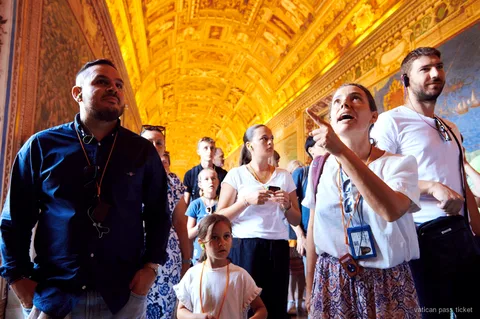
A vatican pass ticket is what most people type when they are trying to book their way into the Vatican Museums, the Sistine Chapel and, often, St. Peter’s Basilica, without wasting a morning of their trip standing in a queue. I’ve spent time comparing the real products sold under that search term, and my first piece of honest advice is this: there is no single official “Vatican pass” the way there is a Roma Pass for the wider city. What you are actually choosing between is a self-guided skip-the-line ticket, a guided tour in various shapes, or a handful of add-ons like the dome climb. Once you see it that way, picking the right one gets a lot easier, and the rest of this page walks through exactly how I’d make that call for different kinds of trips.
Is There Really a Single “Vatican Pass” Ticket?
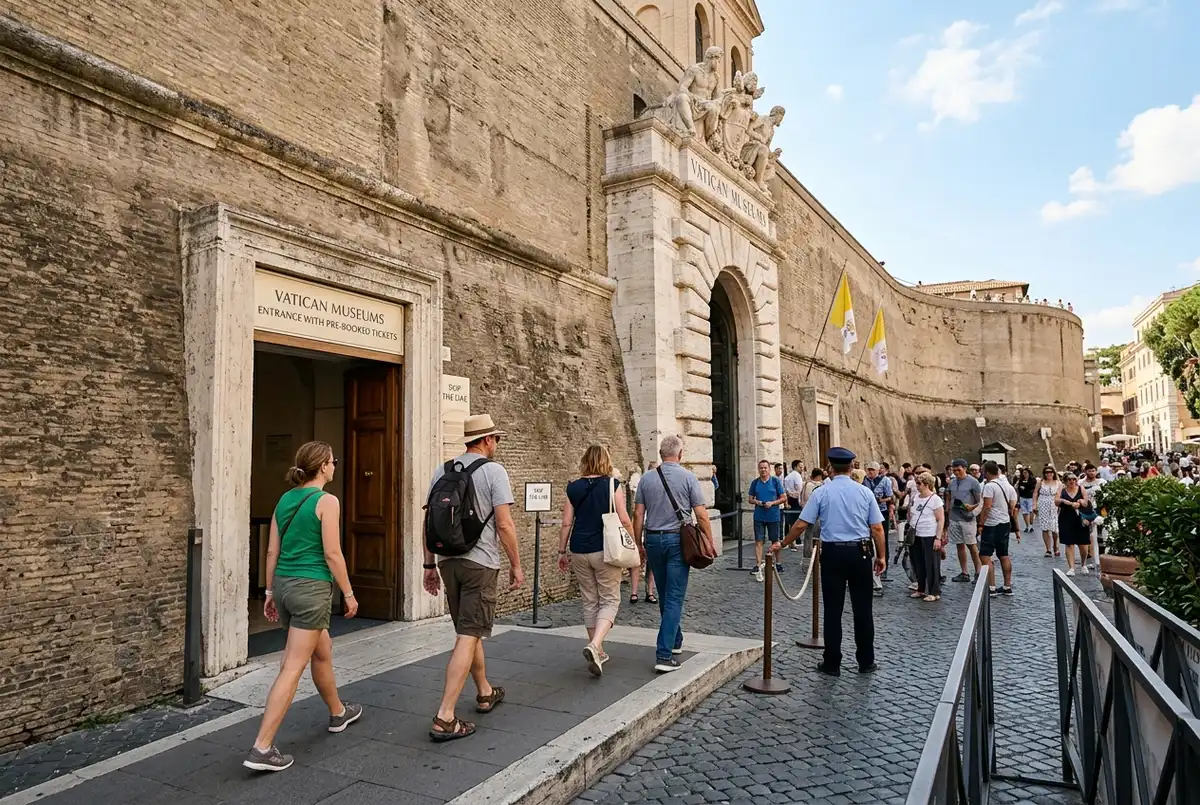
No, and I think it is worth saying plainly before anything else. The Vatican Museums sell one official entrance ticket that covers the museum galleries and the Sistine Chapel. St. Peter’s Basilica is a separate building with its own free entrance and its own line. There is no bundled government pass that covers everything in one purchase, which is different from how some other European capitals sell their attractions. What you will find, and what this site compares, are eight real skip-the-line and guided products, priced from €32.50 up to €149, each covering a different combination of those sites. For the full breakdown of what drives that price gap, I’d start with the Vatican Museum tickets price guide, which walks through official versus reserved-entry pricing line by line.
How Much Should You Actually Pay?
The honest answer is that price mostly tracks what is bundled in, not how “official” a listing sounds. The cheapest self-guided ticket I compared runs €32.50 and gets you through the priority lane into the Museums and Sistine Chapel on your own schedule. Guided small-group tours sit in the €42 to €79 range depending on group size and whether St. Peter’s Basilica is included as standard. At the top end, a capped six-person early-access tour or the dome climb push past €100. If I were booking on a tight budget, I’d take the self-guided ticket without hesitation. If a guide’s context matters more to you than saving money, the mid-tier guided options are where I’d look first. What actually separates the tiers is not polish, since every product I compared handles the booking and skip-the-line mechanics cleanly, but what is bundled in: a live guide, a smaller group size, before-hours access, or the dome climb, each adds its own increment to the base price. I’d treat the price as a rough proxy for how much of your own time it buys back, more than as a signal of quality.
Guided Tour, Self-Guided Ticket, or Something Else?
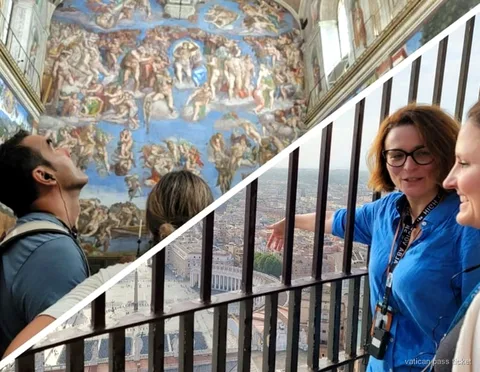
This is the real decision, more than which specific listing you click. A self-guided ticket suits anyone who already knows roughly what they want to see and would rather move at their own pace than keep up with a group. A guided tour adds a person explaining the Sistine Chapel ceiling and the Raphael Rooms as you walk through them, which I think is genuinely worth the premium if you have never studied the art beforehand. There is also a small-group format capped well below a standard tour’s size, for travelers who want commentary without a crowd. I’ve laid out every format side by side in the guide to choosing the right Vatican tour, including which one I’d pick for a first-time visit versus a repeat trip.
Who Should Book Which Ticket?
I think the honest answer depends more on who you are traveling with than on your budget alone. For a solo traveler or a couple who reads a little history beforehand and likes exploring at their own speed, I’d book the standard self-guided ticket and not look twice at the guided options. For families with younger kids, I would lean guided, since a live guide keeps attention on the highlights in a way a self-guided route generally does not, and a fixed group pace prevents the day from sprawling. If you are the kind of traveler who plans a trip around a handful of specific artworks, the small-group tour capped well under a standard group’s size is worth the extra cost, since your guide can actually slow down at the pieces you care about instead of managing a crowd. And if photography or a genuinely quiet Sistine Chapel matters more to you than price, I would put the early-access options at the top of your list, even though they sit at the top of the price range too.
Do You Need a Separate St. Peter’s Basilica Ticket?
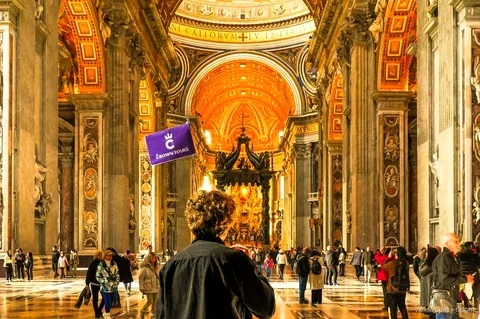
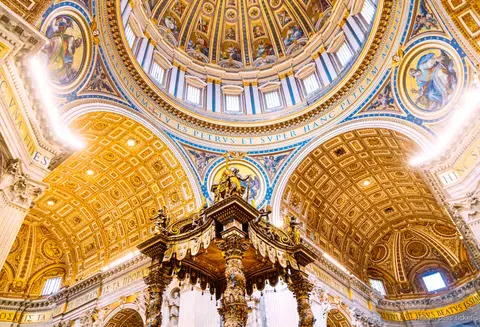
Not exactly, since the Basilica is free to enter, but “free” and “guaranteed” are not the same thing here. The Basilica’s own security line can run longer than the Museums’ line, especially by mid-morning, and it is managed entirely separately from the museum ticket queue. If seeing the Basilica the same day matters to you, I would either book one of the guided tours that includes reserved Basilica access as standard, or plan to walk over immediately after your museum visit rather than leaving it for later in the day. The St. Peter’s Basilica tickets guide covers what is genuinely free, what a paid skip-the-line option buys you, and when the free entrance alone is enough.
Should You Buy the Roma Pass Instead?
I get why this question comes up: the Roma Pass is a well-known Rome tourist card, and it feels natural to assume it covers everything. It does not cover skip-the-line Vatican Museums entry, because Vatican City is its own sovereign state and sits outside Rome’s civic attraction network entirely. If your trip is mostly about Rome’s other major sites, the Roma Pass can still make sense on its own math. But for the Vatican specifically, I would book a dedicated ticket rather than count on the pass to get you in faster. The Roma Pass and Rome tourist card guide runs the actual numbers on when the pass pays for itself.
Can You Visit the Vatican and the Colosseum on the Same Day?
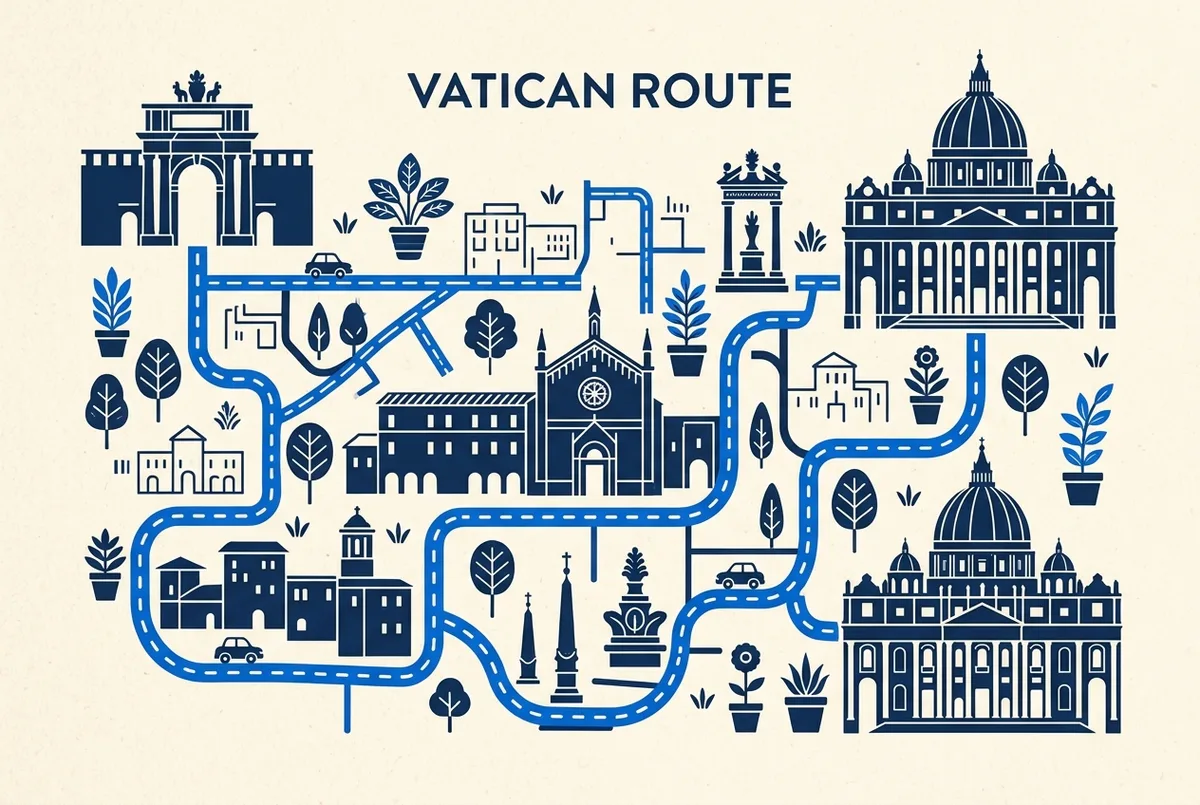
You can, but I would not pretend it is a relaxed day if you try to do both without a plan. The two sites sit on opposite sides of central Rome, and there is no single combined ticket since they answer to different authorities entirely. What actually works is booking timed entry for each site separately and building in a real gap, at least 45 minutes, for the transfer between them. If a packed single day is what you are working with, I’d put the Vatican in the morning, since its lines build faster, and the Colosseum in the afternoon. The Vatican and Colosseum combined-visit guide lays out the itinerary math in more detail.
What if You Want to See the Pope?
This is a genuinely different process from anything else on this page, and I think it is worth flagging clearly: papal mass and general audience tickets are free, but they come through the Prefecture of the Papal Household rather than any ticket vendor. There is no purchase involved, only a request submitted ahead of your trip. If your dates line up with a Wednesday audience or a mass you want to attend, I would sort that request out early, then treat your museum or Basilica ticket as a separate booking for the rest of that same day. The full process is covered in the papal mass and general audience guide.
Wait, Is Vatican City Actually Its Own Country?
Yes, genuinely, and I find this is one of those facts that changes how people plan once they know it. Vatican City is a sovereign state, the smallest one in the world, with its own postal service, its own gendarmerie and even its own passports, though not the kind an ordinary tourist can apply for. That is part of why the Roma Pass and Vatican tickets are two separate systems rather than one, and it is also why a walk between St. Peter’s Square and the Colosseum feels like crossing a real border in miniature, even though nothing about the crossing itself looks like one. I think it is also why so many of the ticket questions on this page have oddly specific answers: two different governments run these two sets of attractions, and each has its own rules. If the trivia has you curious, the Vatican City passport and citizenship facts page goes deeper, and Wikipedia’s overview of Vatican City is a solid starting point for the wider history.
When Should You Plan Your Visit?
Spring and the week around Christmas are the two stretches I would plan around most carefully, since both bring noticeably bigger crowds than an average Tuesday in November. Within any given day, the earliest available slot consistently sees the shortest security lines and the calmest Sistine Chapel, in my experience comparing what tour operators themselves report. The one day I would actively avoid unless you are chasing free entry specifically is the last Sunday of the month, when admission is free and the galleries fill up accordingly. For getting there, the closest stop is Ottaviano-San Pietro on Metro Line A, about a 10 minute walk from the Museums entrance, and Rome’s official tourism board is a reasonable source for checking current public transport schedules before you go. The Vatican visit planning guide covers hours, rules and the walk from the metro in full, including the transit routes from the closest metro and bus stops.
What Should You Wear and Bring?
The dress code is strict and applies to absolutely everyone, adults and children alike: shoulders and knees covered, no exceptions for August heat. I would pack a light scarf even if you are confident in what you are wearing, since security staff enforce this consistently and turn people away at the door rather than making exceptions. Comfortable shoes matter more than most first-time visitors expect, since the museum route is long and entirely one-directional once you start walking it. Bags are allowed but get checked, and large backpacks or suitcases are not permitted inside. The Vatican dress code guide covers the specifics by gender and season if you want to double-check before you pack.
What Will You Actually See Inside the Museums?
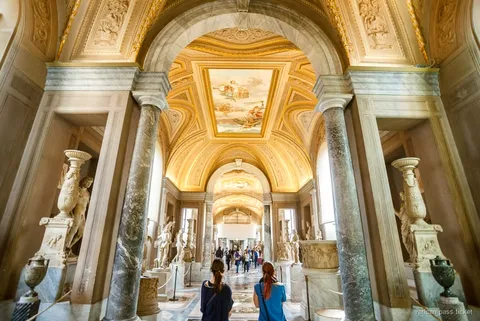
The route takes you through classical sculpture in the Pio Clementino, a 120 metre corridor of Renaissance maps in the Gallery of Maps, Raphael’s frescoed rooms including The School of Athens, and finally the Sistine Chapel itself. I would not try to see every room in equal depth on a first visit. Pick two or three galleries you genuinely care about ahead of time, and give yourself permission to move briskly through the rest, since the crowd flow tends to push you along anyway. The Sistine Chapel has no posted time limit, so once you are there, take the extra few minutes to actually look up. The Vatican Museums highlights guide breaks down each major room by room.
Is the Vatican Museums Worth It?
For the overwhelming majority of visitors, yes, and I would say that even accounting for the crowds and the queue at busy times. The scale of the collection and the Sistine Chapel ceiling itself genuinely live up to the reputation, which is not something I say about every heavily marketed attraction. Where I would set real expectations is around pacing: this is not a quiet, contemplative museum experience during peak hours, it is closer to a well-organized crowd moving in one direction. If that sounds like a dealbreaker, an early-access or before-hours tour buys you a meaningfully quieter version of the same rooms, and I think that trade is worth making for anyone who has been disappointed by an overcrowded museum before. The honest look at whether the Vatican Museums are worth it covers the visitor experience in more depth, crowds included.
What’s Worth Adding to a Vatican Day?
Once the core ticket is sorted, a few extensions are worth knowing about even if you skip all of them. The Vatican Necropolis, the excavated area beneath St. Peter’s Basilica believed to hold St. Peter’s tomb, requires a separate written application through the Vatican’s own Excavations Office weeks in advance, and it is genuinely worth the paperwork if early Christian history interests you. Castel Gandolfo, the papal summer residence in the hills outside Rome, makes a good half-day add-on if you have more than a single day in the area and want a change of pace from the crowds. I would not try to fit either into the same day as your main museum visit. Both work better as a separate outing, ideally on a trip long enough that missing one museum morning does not cost you anything.
Insider Tips for a Smoother Visit
A few small decisions make a real difference to how the day feels. Book the earliest slot you can get, since every operator I compared reports the same pattern: galleries fill from mid-morning and stay busy until closing. Avoid Wednesday mornings if St. Peter’s Basilica is part of your plan, since the weekly papal general audience in St. Peter’s Square affects access and crowd flow across the whole area, not just the audience itself. Keep your confirmation on your phone or as a screenshot rather than relying on patchy wifi near the entrance, and if you added an audio guide, download the companion app the night before over your hotel’s connection instead. I would also build in slightly more time than feels necessary for the security checkpoint, which is shared by everyone regardless of ticket type and can move slowly on a crowded morning.
My Honest Take on Booking
If I had to pick one ticket for a first-time visitor with no particular constraints, I’d point them toward the standard skip-the-line entrance ticket. It is the cheapest legitimate way past the ticket-office queue, and it does not lock you into anyone else’s pace through galleries you might want to linger in. If you are visiting with kids who need more engagement than self-guided wandering provides, or if you have never read up on the art beforehand, I’d spend the extra money on a guided option instead, ideally one that folds in St. Peter’s Basilica so you are not managing a second queue later that day. And if crowds are your main concern above everything else, including price, the early-access options are the one place I think the premium is clearly earned. Whichever you choose, book ahead rather than showing up and hoping, since the Vatican’s own official ticketing information makes clear how quickly popular days fill. None of these picks are the only right answer, since the best ticket really is the one that matches how you actually like to travel, but if you take one thing from this page, I’d rather you leave with a booked slot than a longer list of tabs to compare.