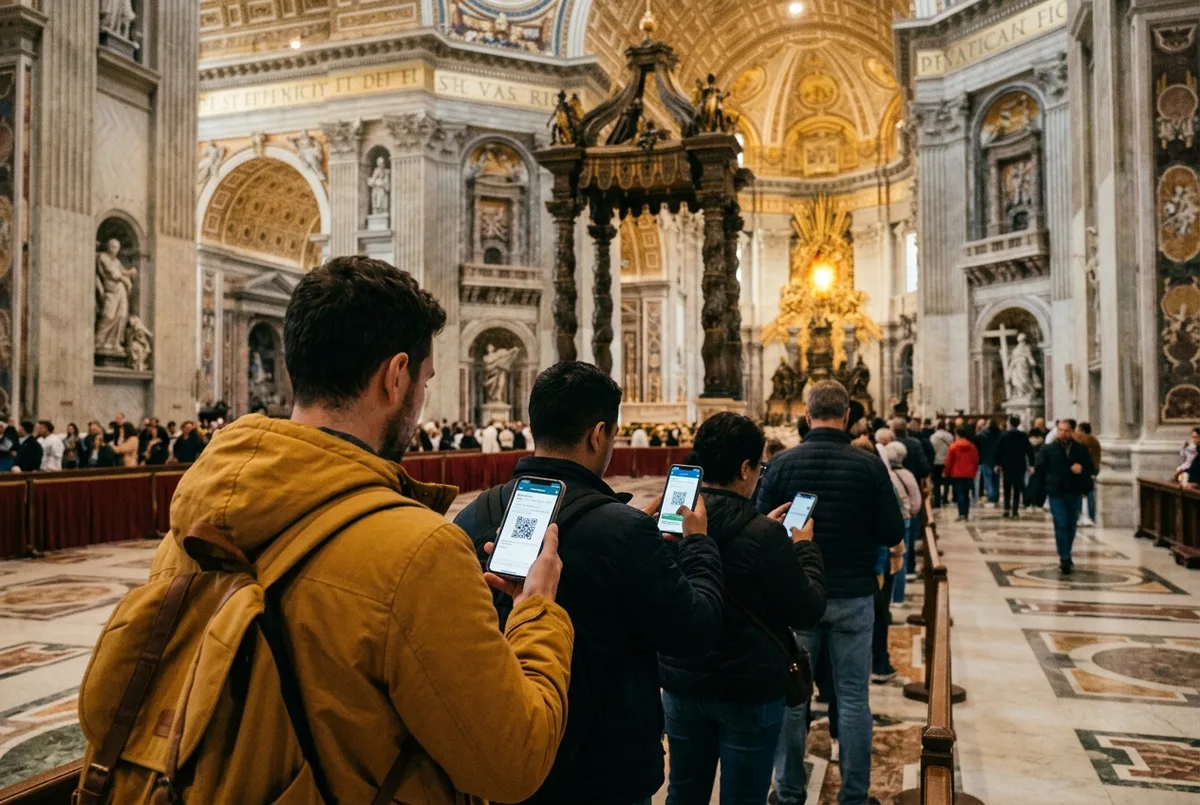
St Peter’s Basilica tickets are not required for basic entry, since walking into the Basilica itself is free for everyone. Here’s what I’d actually do before you assume that settles the question: check how long the security line typically runs on your travel dates, because a free ticket that costs you ninety minutes standing outside isn’t as free as it sounds. If you want to see the full lineup of vatican pass ticket products I track before deciding whether to pair a paid Basilica option with anything else, the homepage has them all in one place. See which of the eight vatican tours actually bundle st. peter’s basilica into the price before you decide whether a reserved or guided product is worth adding to your day.
Is entry to St. Peter’s Basilica really free?
Yes, genuinely. Unlike the Vatican Museums next door, walking into St. Peter’s Basilica itself carries no admission fee, and it never has. The Basilica operates on its own, separate from the Museums’ ticketed system entirely.
I would not let anyone tell you otherwise, and I would be skeptical of any street vendor or unofficial site claiming you need to buy a “St. Peter’s Basilica ticket” just to walk through the door. What you’re actually paying for, if you choose to pay for anything, is time and context, not the right to enter.
So why do reserved-entry tickets for St. Peter’s Basilica exist at all?
Because the security line to get in can run long, sometimes well over an hour, especially in peak season and around midday. A reserved-entry or guided product moves you through a faster lane instead of the general queue, and some bundle in a live guide who explains what you’re looking at once you’re inside.
My honest take: I’d treat this exactly like the Vatican Museums’ own skip-the-line products. The base experience is free either way. What you’re buying with a paid option is certainty and speed, not access itself. If neither of those matters to you and you’re happy to queue, save the money.
When is it actually worth paying for St. Peter’s Basilica access?
I would pay for a reserved-entry or guided product any time you’re visiting during peak season, roughly April through October, or during a school holiday, since the free queue grows unpredictably on those dates. I would also pay if a live guide’s context genuinely matters to you, since the Basilica holds Michelangelo’s Pieta, Bernini’s Baldachin and the papal tombs, and a guide flags details most visitors walk straight past.
Where I would not pay: a quiet weekday morning outside peak season, when the free line can move quickly enough that a paid product barely saves you any real time. I’ll cover the quietest windows in more detail below.
What are the quietest times to visit for free?
Early morning, right at opening, tends to be the shortest security line of the day, before tour groups and cruise-ship crowds build up. Late afternoon, closer to closing time, is the other reliable window I’d point to. Both beat a midday visit by a wide margin, free or paid.
I would build a free visit around one of those two windows specifically if you’re trying to avoid the paid options entirely. It won’t guarantee zero wait, but it noticeably improves your odds compared to arriving at 11am on a Saturday in July.
How much do paid St. Peter’s Basilica products actually cost?
Pricing depends heavily on what’s bundled in, since most operators sell Basilica access as part of a wider Vatican Museums tour rather than as a standalone Basilica-only ticket. My separate page on St. Peter’s Basilica price breaks down exactly what drives the cost difference between a plain security-line skip and a fuller guided experience.
I would not assume the most expensive combined tour is automatically the right call if all you actually want is the Basilica itself. Match the product to what you’re trying to see, not the other way around.
Should you book through the official Vatican channel or a reseller?
Both are legitimate paths, and the difference comes down to what each one actually sells you. My St. Peter’s Basilica official website versus resellers guide covers this in full, since the Basilica runs its own separate reservation system from the Vatican Museums’ own booking portal, a distinction that trips up a lot of first-time bookers.
My honest advice: check the official channel first if you only want the free basic entry with a reserved time slot. If you want a guide or a bundled Museums visit without juggling two separate bookings, a reputable reseller product is a sane choice, not a downgrade.
How bad is the wait if you skip a paid ticket entirely?
It genuinely varies by day and season, which is exactly why I wouldn’t give you a single number and call it accurate. My dedicated page on St. Peter’s Basilica skip the line and wait times sets realistic expectations by season and time of day, since the security queue here is a separate, often longer wait than the one at the Vatican Museums entrance.
I would check that page specifically if your travel dates fall in peak season and you’re on the fence about paying for a reserved slot. Knowing the realistic wait ahead of time makes the decision a lot easier than guessing.
What’s the difference between the Basilica, the Grottoes and the Necropolis?
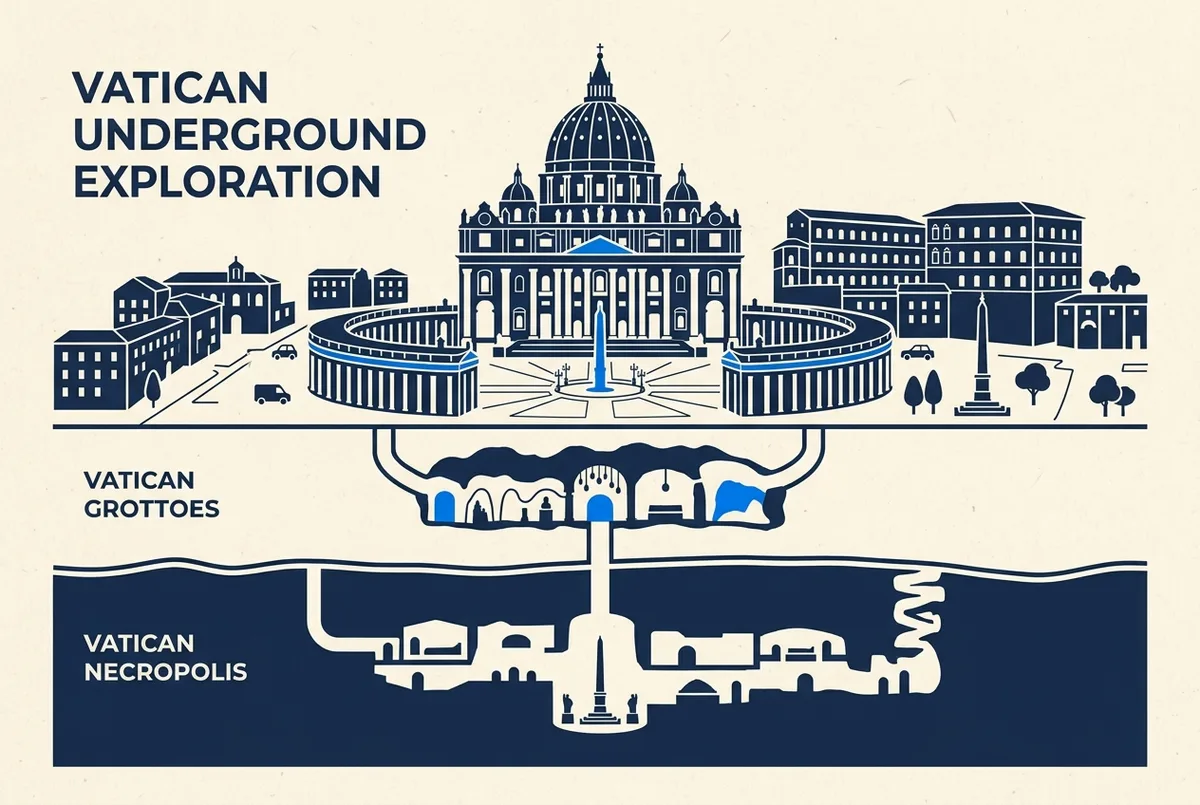
This trips people up constantly. The Basilica itself is the main church, free to enter. The Vatican Grottoes sit beneath it, home to the tombs of past popes, and are also freely accessible with no separate ticket. The Vatican Necropolis, often called the Scavi, sits deeper still, a genuine archaeological excavation believed to include St. Peter’s own tomb, and requires a separate advance booking through the Vatican’s own Excavations Office.
My Vatican Grottoes and St. Peter’s tomb guide untangles exactly which of these three you actually want to see, since I’ve watched travelers book the wrong one more than once. I would read that page before assuming “St. Peter’s tomb” means the same thing to every visitor searching for it.
What should you wear and bring to St. Peter’s Basilica?
The dress code here is strict and enforced without exception: shoulders and knees covered for everyone, regardless of the weather or the season. Security staff turn away visitors in shorts, short skirts or sleeveless tops at the door, free ticket or not.
I would pack a light scarf or wrap even in August heat, since I’ve seen travelers turned away at the checkpoint after waiting through the entire security line, which is a genuinely frustrating way to lose an hour. Large bags and bulky backpacks also slow down security screening, so I’d travel as light as you reasonably can on the day you visit.
Does the Wednesday papal audience affect Basilica access?
Often, yes. The weekly papal general audience takes over St. Peter’s Square on Wednesday mornings, which can restrict or reroute access to the Basilica itself during that window, and several guided tours substitute a different stop on that specific day.
I would avoid booking a Wednesday morning slot if seeing the Basilica’s interior is non-negotiable for your trip. If you specifically want to attend the audience instead, that’s a separate, genuinely free experience with its own request process, which I cover in more depth elsewhere on this site.
Is St. Peter’s Basilica worth visiting if you’re not religious or an art history buff?
Yes, honestly. You don’t need any particular faith or art background to find the scale of the place striking, the central dome alone is worth the visit for most travelers, free or paid. I would not let a lack of religious or art history knowledge talk you out of going.
That said, I do think a little context helps here more than at most sights in Rome. Knowing what the Baldacchino actually is, or why the Pieta stopped Michelangelo’s critics cold when it was unveiled, changes the visit from “a very large, ornate church” into something that actually lands. That’s exactly why I lean toward a guided or audio-narrated option for a first visit here specifically, more than I would for a lot of other Rome sights.
Should you climb the dome while you’re there?
If a panoramic view over Rome appeals to you, yes, I would genuinely consider it, since it’s one of the better views the city offers from ground level up. My St. Peter’s Basilica dome tickets guide covers the two-price structure, stairs-only versus elevator-plus-stairs, and the honest physical reality of the 320-plus step climb.
I would not book the dome climb lightly if you have any mobility or fitness concerns. It’s genuinely demanding, and I’d rather you know that going in than discover it partway up a narrow spiral staircase with no way to turn back.
Should you book a guided tour of the Basilica specifically?
If you want a guide explaining the Baldacchino, the Pieta and the papal tombs rather than working it out from a guidebook, yes. My St. Peter’s Basilica tours guide compares a guide’s explanation against simply skipping the security queue unaccompanied, since both solve different problems.
I would book a guided option specifically if the history and art genuinely interest you, and skip it if your priority is simply getting inside quickly. Both are valid choices; they’re just answering different questions.
Does visiting St. Peter’s Basilica connect to the Vatican Museums visit?
Only logistically, not through a single combined ticket, since the two sites run separate admission systems even though they sit right next to each other. My Vatican Museum ticket price guide breaks down the Museums side of the trip in full, including which specific tours bundle Basilica access in as standard rather than leaving it as a separate stop.
I would treat these as two planning decisions rather than one, even on a single-day visit. Assuming one ticket automatically covers both is one of the more common mistakes I see in Vatican trip planning.
What art and highlights are actually inside worth knowing about beforehand?
Michelangelo’s Pieta, Bernini’s bronze Baldachin over the papal altar, and the tomb of St. Peter beneath the main altar are the three things I’d tell any first-time visitor to look for specifically. My what to see in the Vatican Museums highlights guide covers the adjacent Museums side of the art in more depth, since a lot of visitors treat the Basilica and the Museums as one combined art experience even though they’re separately ticketed.
I would spend at least fifteen to twenty minutes simply standing under the central dome before moving on. It’s one of the largest interior church spaces in the world, and rushing through undersells just how big it actually feels once you’re inside it.
What if you only have one hour to spend at the Vatican?
I would spend it inside the Basilica rather than rushing the Museums, if I genuinely had to pick just one. The Basilica’s core highlights, the Pieta, the Baldacchino, the dome itself, are concentrated in a single space you can cover in under an hour, while the Museums route runs long enough that a rushed hour there tends to leave visitors feeling like they missed the point entirely.
That’s a genuinely unpopular opinion among Vatican guides I’ve read, since most push the Sistine Chapel as the unmissable stop. I stand by it anyway for the specific traveler with only sixty minutes: the Basilica rewards a short, focused visit far better than the Museums do, since nothing there requires a fixed one-way route through dozens of rooms to reach the highlight.
What would surprise a first-time visitor most?
The sheer scale, more than anything else. Photos genuinely undersell how large the interior is, and I’ve watched more than one first-time visitor stop dead a few steps past the entrance simply taking it in. The other surprise is how much natural light the space holds, since a building this old and this ornate somehow doesn’t feel dim or cave-like the way older churches often do.
I would tell any first-timer to look up almost immediately after walking in, rather than straight ahead at the altar. The scale of the dome overhead is genuinely part of the experience, and I think it’s the detail rushed visitors miss most often.
What I’d actually book
For a quick, free visit with a flexible schedule and off-peak dates, I’d skip paid access entirely and just time your visit for early morning or late afternoon. For peak season, or if a live guide’s context genuinely matters to you, I would pay for a reserved-entry or guided product rather than gamble on the security line. And if a panoramic view over Rome is on your list at all, I’d pair the visit with the dome climb, since it’s one of the better views the city offers and hard to recreate later in your trip if you skip it now.
Whatever you decide, I would not treat “it’s free” as the end of the decision. Free and fast are two different things at St. Peter’s Basilica, and matching your choice to how much time you actually have is the real question here. If you’re still weighing formats against the wider Vatican Museums visit, the Vatican’s own official site is worth checking for the latest Basilica opening hours before you go.
Frequently asked questions
Do you need to book St. Peter’s Basilica tickets in advance?
Not for basic entry, since it’s free and open to walk-up visitors. A reserved-entry product is optional and mainly buys you a faster security line and, on some listings, a live guide.
Is St. Peter’s Basilica free every day of the year?
Basic entry stays free year round, though the Basilica occasionally closes to visitors for religious services or papal events. I would check the current schedule before a tightly planned visit, especially around major Catholic holidays.
How long does a St. Peter’s Basilica visit typically take?
Most visitors spend 30 minutes to an hour inside, longer if you’re climbing the dome or lingering over specific artwork. I’d budget extra time for the security line itself if you’re skipping a reserved-entry product.
Can you visit St. Peter’s Basilica and the Vatican Museums on the same day?
Yes, and a lot of visitors do, though they run as two separate stops since the sites use different entrances and different booking systems. I’d plan the order based on which one has the shorter line on your specific morning.
Are St. Peter’s Basilica tickets the same as Vatican Museums tickets?
No. They’re separate systems entirely, run by different offices with different booking portals. Buying one does not include the other, which is one of the more common points of confusion I see among first-time Rome visitors.