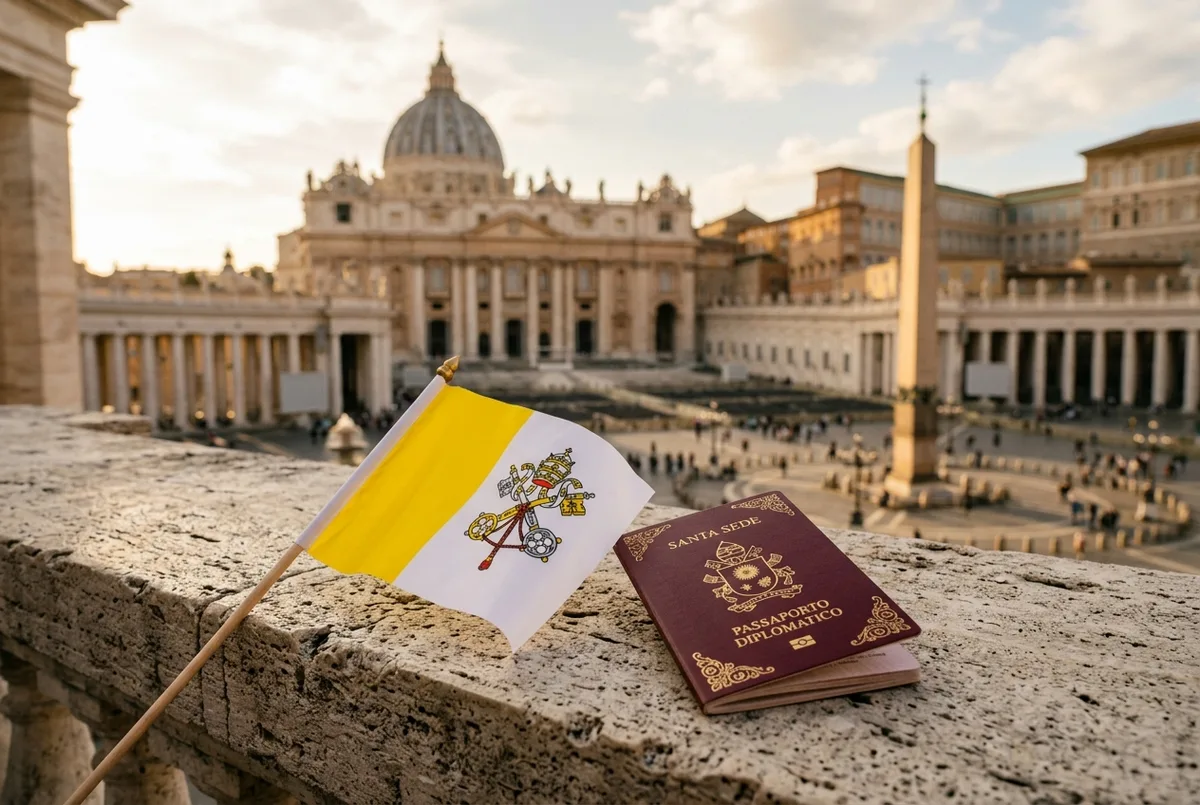
A Vatican passport is real, but it isn’t a passport you can apply for, buy, or collect as a souvenir of your trip. Vatican City genuinely issues diplomatic and service passports, but only to a small number of officials working for the Holy See, never to tourists, never to the general public, and never through any process a visitor could start. Here’s what I’d tell you plainly before we go further: if you’re picturing a Vatican passport as something you could theoretically hold, that’s not how this works, and I’d rather correct that now than have you disappointed three paragraphs from now. This page is the trivia stop, not the ticket stop. If you came here planning your actual visit, the vatican pass ticket comparison on the homepage lists every product I track for the trip you’re actually taking. Once the citizenship curiosity is satisfied and you’re back to planning the museum side of things, browsing the full spread of Vatican Museums tickets and tours by price shows every option in one place, no diplomatic passport required.
Is there really a Vatican passport?
Yes. Vatican City is a sovereign state, the smallest in the world by both area and population, and like any sovereign state it issues its own passports. The distinction that matters is who gets one: the Holy See issues diplomatic passports to its highest-ranking officials and service passports to a broader group of Vatican employees, but there is no ordinary tourist or civilian passport at all, because Vatican City has no ordinary civilian population in the way most countries do.
I would stop anyone right here who’s hoping this page ends with a way to get one. It doesn’t, and I’d rather be direct about that than string the answer out. What follows is the genuinely interesting part: how citizenship and passports work in a country with essentially no permanent residents in the conventional sense.
Who actually qualifies for Vatican citizenship?
Vatican citizenship is functional, tied to a job or office rather than to birth or residence the way most countries assign it. Cardinals residing in Vatican City, Swiss Guards, diplomatic staff, and a handful of others connected directly to the Holy See’s administration can hold it, and it’s granted for as long as that role continues.
My honest take on this: it’s one of the most unusual citizenship systems in the world, precisely because it isn’t hereditary and isn’t permanent. A child born to a Vatican citizen inside Vatican City doesn’t automatically inherit citizenship the way most countries would grant it. I find that detail genuinely more interesting than almost anything else in this whole topic, and it’s the single fact I’d lead with if I were explaining this to a curious traveler at dinner.
What happens to Vatican citizenship when someone leaves their role?
It typically ends. Since Vatican citizenship attaches to an office or a job rather than to a person permanently, someone who retires, is reassigned, or leaves Vatican employment generally loses their Vatican citizenship rather than keeping it for life.
I would call this the most counterintuitive part of the whole system for most readers. We’re used to citizenship being something you keep regardless of your job. Here, the job and the passport are tied together directly, and I think that single fact does more to explain why Vatican City isn’t really comparable to any other country than any other detail on this page.
What is a “Vatican passport stamp,” and can you get one?
This is the single most-searched confusion in this whole topic, so let me answer it directly: there is no immigration checkpoint between Italy and Vatican City, so nobody stamps a tourist’s passport entering Vatican City the way you’d get stamped crossing an international border elsewhere. You simply walk in. What people are usually picturing, or hoping for, is a keepsake stamp of some kind, and the closest real equivalent is the Vatican’s own post office, which sells genuine Vatican City postage stamps and offers Vatican postmarks on postcards and mail sent from inside Vatican City.
I would manage expectations here directly: if a “Vatican passport stamp” was on your bucket list, redirect that toward mailing a postcard from the Vatican post office instead. It’s a genuinely fun souvenir, and unlike an imaginary passport stamp, it’s a real, tangible thing you can actually walk away with.
How do you get a Vatican passport, realistically?
You don’t, not as a tourist, and not through any application process open to the public. The only path is employment or an official role directly connected to the Holy See’s administration, positions like the Swiss Guard, Curial staff, or senior clergy resident in Vatican City, and even then citizenship is granted as a function of the role, not requested independently of it.
I wouldn’t waste a reader’s time pretending there’s a workaround here. If your search brought you to this page hoping for an actual path to Vatican citizenship, the honest answer is that it isn’t something available to outsiders in any practical sense, and I’d rather tell you that plainly than send you chasing a process that doesn’t exist for civilians.
Does the Pope have a Vatican passport?
Yes, as the head of state of Vatican City, the Pope holds Vatican citizenship and travels internationally using Vatican diplomatic credentials rather than an ordinary passport from any other country. Papal trips abroad, which happen fairly often, are conducted as official state visits, with the diplomatic arrangements that implies.
I find this detail genuinely useful context for the whole citizenship question, since it shows the system working as designed: the Pope’s citizenship exists because of the office, exactly like every other Vatican citizen’s does, just at the top of the structure. My page on whether the Pope can leave Vatican City goes further into how that actually works in practice.
How many people actually hold Vatican citizenship?
A genuinely small number, generally cited in the low hundreds, which makes Vatican City’s citizen population one of the smallest of any sovereign state on Earth by a wide margin. Compare that to a mid-sized office building’s headcount in most cities, and you get a sense of scale.
I think this is worth sitting with for a second: an entire sovereign nation, recognized internationally, with fewer citizens than a single large employer in most capital cities. I’d use that fact if you want a genuinely memorable answer the next time someone asks what’s actually unusual about the Vatican beyond the art and the architecture.
Does a Vatican passport work like other countries’ passports for travel?
For the small number of people who actually hold one, yes, functionally: a Vatican diplomatic or service passport is a real travel document recognized under international diplomatic norms, used by Holy See representatives for official travel and diplomatic missions worldwide. It isn’t ranked on the consumer passport indexes built around ordinary tourist and citizen passports, since it was never meant to serve that population.
I’d point anyone curious about the practical travel access this document carries to my separate page on Vatican passport strength and visa-free travel, since that’s a genuinely different question from whether the passport exists at all, and deserves its own answer rather than a rushed paragraph here.
Is “the Vatican” the same thing as “Vatican City”?
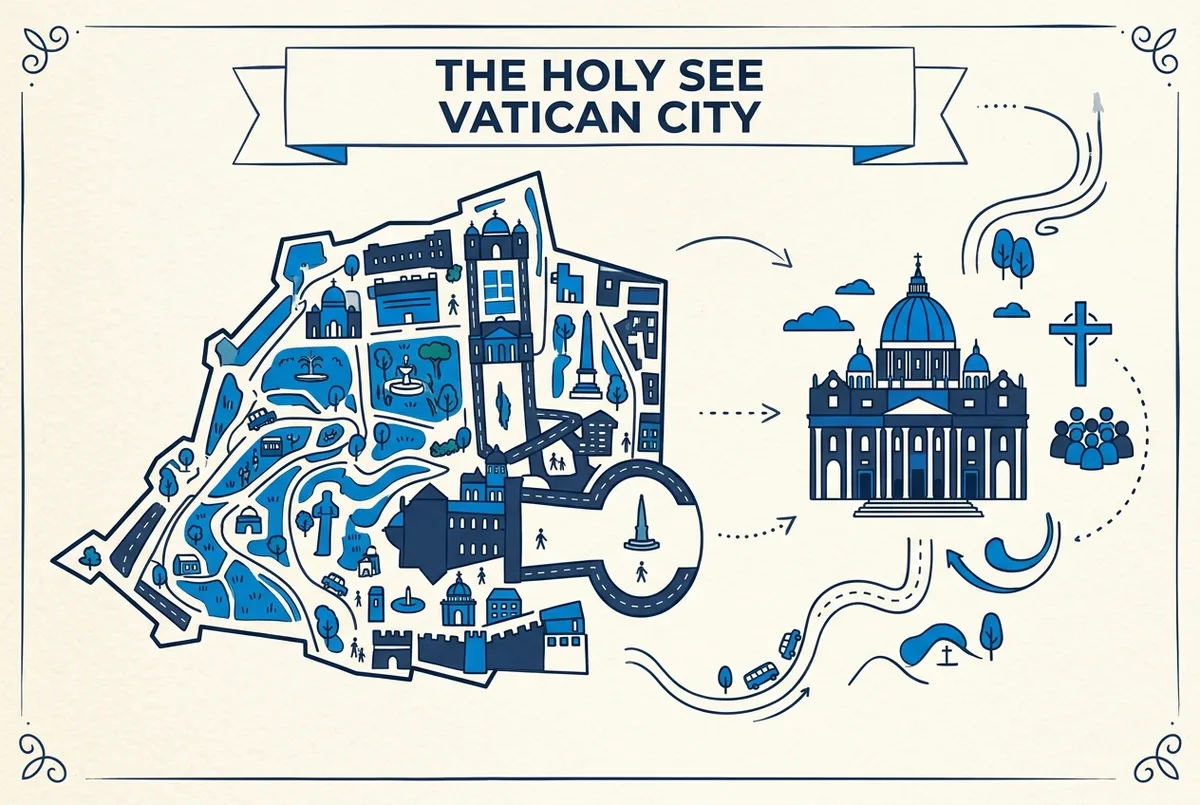
Not exactly, and this mix-up sits underneath a lot of the confusion in this whole topic. “The Vatican” often refers loosely to the Holy See, the Catholic Church’s central governing authority, while “Vatican City” is specifically the sovereign micro-state where that authority is headquartered. The distinction matters more than it first appears, especially once citizenship and diplomacy enter the conversation.
I’d send anyone who wants the full, untangled explanation to my page on Vatican vs Vatican City explained, since getting this distinction right actually clarifies most of the other trivia on this page too, including why citizenship works the way it does.
Why does any of this matter if you’re just visiting as a tourist?
Honestly, it doesn’t change anything about your actual trip. You don’t need any special documentation to visit Vatican City as a tourist beyond the passport or ID you’d normally carry through Italy, and none of the citizenship rules above affect how you book a museum ticket, attend a mass, or walk into St Peter’s Square.
My honest take: I think this topic is worth reading purely because it’s genuinely interesting, not because it changes your packing list. If you came here out of curiosity rather than a practical planning need, that’s exactly the right reason, and I’d rather satisfy that curiosity properly than pretend it has some hidden relevance to your itinerary that it doesn’t actually have.
What would I actually tell a curious traveler?
I’d lead with the fact that Vatican citizenship is functional, not hereditary, since that single detail explains almost everything else that seems strange about this topic. I’d follow it with the honest note that there’s no passport stamp waiting for you at the border, and that a postcard from the Vatican post office is the real, tangible version of that souvenir instinct. And I’d close by pointing out that none of this affects your actual visit in the slightest: the passport trivia and the ticket you need to see the Sistine Chapel are two completely unrelated questions, and I’d rather you leave this page smarter about the Vatican than confused about what you need to pack.
If the ticket side of your trip is still unsettled, my Vatican Museum tickets price guide covers what you’ll actually pay to get in, and my planning your Vatican visit guide covers the logistics beyond just the ticket. For the official record on how Vatican City functions as a state, the Holy See’s entry on Vatican City at Wikipedia is a solid, well-sourced starting point if you want to go deeper than this page does.
Frequently asked questions
Is there really such a thing as a Vatican passport?
Yes, but only as a diplomatic or service passport issued to a small number of Holy See officials. There is no ordinary civilian or tourist Vatican passport available to anyone outside that group.
Can a tourist apply for Vatican citizenship or a Vatican passport?
No. Vatican citizenship is granted only through specific roles connected to the Holy See’s administration, such as the Swiss Guard or senior clergy resident in Vatican City, and it isn’t open to public application.
Do you get your passport stamped entering Vatican City?
No. There’s no immigration checkpoint between Italy and Vatican City, so nobody stamps a tourist passport there. The closest real souvenir is a postmark from the Vatican’s own post office.
Does Vatican citizenship pass down to children automatically?
Generally no. Since Vatican citizenship is tied to a role or office rather than to birth, a child born to a Vatican citizen doesn’t automatically inherit it the way most countries’ citizenship laws work.
How many people actually hold Vatican citizenship?
A very small number, typically cited in the low hundreds, making Vatican City’s citizen population one of the smallest of any sovereign state in the world.