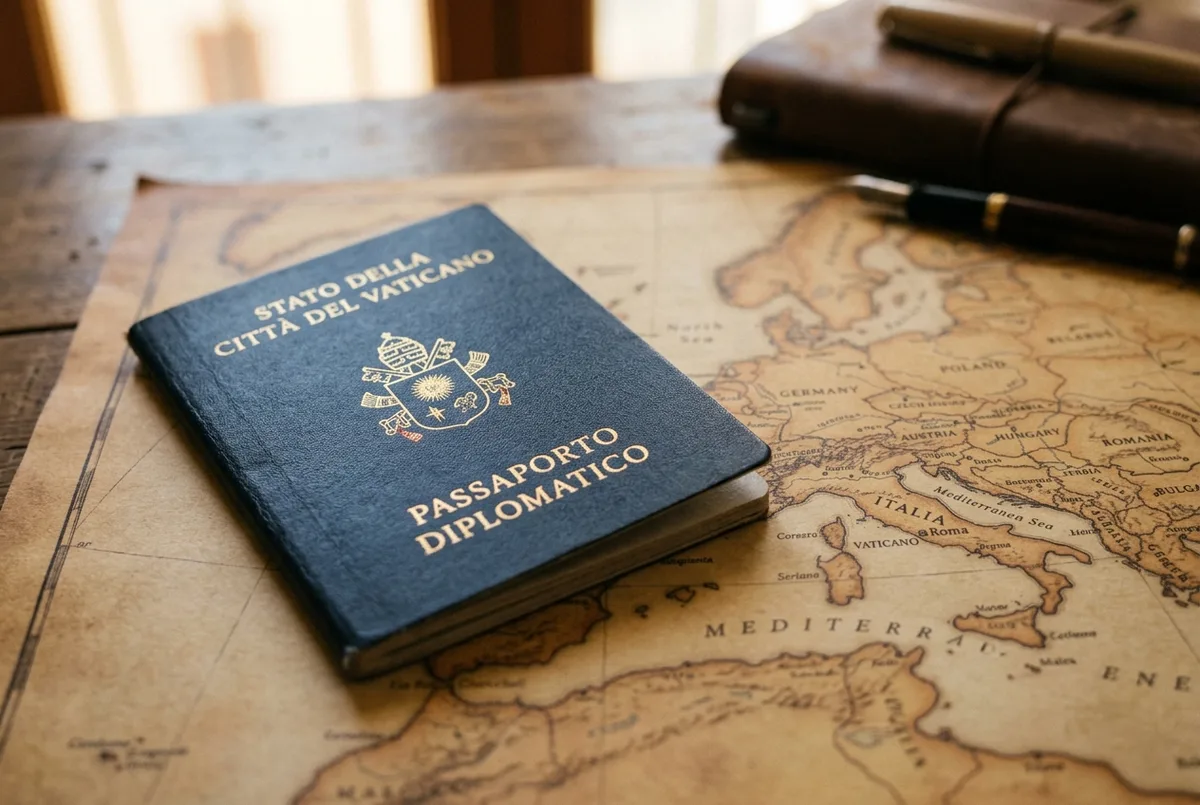
Vatican passport strength isn’t measured the way you’d measure an ordinary country’s passport, because there’s no ordinary Vatican passport to measure. What exists is a diplomatic or service passport issued to a small number of Holy See officials, and its real-world strength comes from the Holy See’s diplomatic relationships with the vast majority of the world’s countries, not from a public ranking system built for civilian travelers. Here’s what I’d say first, before anything else: nothing on this page describes a travel document you or I could ever hold. If you landed here wondering about your own trip’s paperwork, my Vatican passport and citizenship facts pillar is the better starting point, and the vatican pass ticket lineup this site tracks on the homepage is what actually matters for your visit.
Why isn’t Vatican passport strength on the usual passport ranking lists?
Because those rankings, the ones that count visa-free countries for ordinary citizens, are built around passports issued broadly to a national population. Vatican City has no such population in the conventional sense, so its diplomatic and service passports simply don’t fit the methodology those indexes use.
I would treat any number you see floating around online claiming to rank “the Vatican passport” against consumer passports with real skepticism. It’s comparing two fundamentally different categories of travel document, and I think that comparison misleads more than it informs.
What does a Holy See diplomatic passport actually grant access to?
Diplomatic passports generally carry broader visa-free or visa-on-arrival access than ordinary passports, under longstanding international diplomatic norms that most countries honor for accredited diplomats. Since the Holy See maintains formal diplomatic relations with the overwhelming majority of United Nations member states, a Vatican diplomatic passport holder traveling on official Holy See business typically moves with real ease.
My honest take: this access exists because of the diplomatic status, not because of anything unique to Vatican City specifically. Any country’s diplomatic passport carries similar privileges under the same international norms. What makes the Vatican’s version interesting is simply how widely the Holy See’s diplomatic network reaches, not some special exception carved out for it.
Does every Vatican passport holder get this level of access?
No, and this is where I’d slow down and be precise. Vatican City issues both diplomatic passports, for its most senior officials and representatives, and service passports, for a broader group of Vatican employees, and the two carry different levels of travel privilege. A service passport doesn’t automatically grant the same access as a diplomatic one.
I wouldn’t lump these together the way casual online chatter often does. If you’re genuinely researching this topic in depth rather than out of general curiosity, the distinction between the two passport types matters more than any single headline claim about “the Vatican passport.” I would also assume, absent a specific reason to think otherwise, that the diplomatic version is the one carrying the strongest access, simply because that’s how the international norms these privileges rest on are generally structured.
Why does the Holy See have diplomatic relations with so many countries?
The Holy See functions as a recognized subject of international law and conducts formal diplomacy independently of, and in addition to, Vatican City’s status as a physical sovereign territory. It maintains bilateral diplomatic relations with the large majority of the world’s recognized states, a broader network than many far larger and more populous countries maintain.
I find this one of the genuinely underappreciated facts about the Vatican: it isn’t just a religious site or a tourist destination, it’s an active, globally connected diplomatic actor, and that’s precisely why the travel documents its officials carry function as well as they do internationally.
Is this relevant to how you’ll travel as a visitor?
Not even slightly, and I want to be direct about that so nobody walks away from this page confused. Your own passport, whatever country issued it, works exactly the same way for a Vatican City or Rome visit as it does for the rest of your Italy trip. None of what’s described above changes your entry requirements, your visa situation, or anything about how you’ll actually get into Vatican City as a tourist.
I would not spend another minute worrying about this topic affecting your trip planning. It’s genuinely fascinating background on how the Holy See operates in the world, but it sits entirely outside anything you need to prepare for your own visit.
How does this connect to the broader Vatican vs Vatican City confusion?
A lot of the confusion around Vatican passports traces back to not clearly separating the Holy See, the Church’s central governing authority that conducts this diplomacy, from Vatican City, the physical sovereign state where it’s headquartered. Understanding that split clears up most of the “how does this even work” questions people bring to this topic.
I’d point anyone still slightly fuzzy on that distinction to my page on Vatican vs Vatican City explained, since it untangles exactly this, and I think it makes the passport question make a lot more sense once you’ve read it.
What I’d actually take away from this
Vatican passport strength is a real, if narrow, phenomenon: a small number of Holy See officials carry diplomatic or service passports that function effectively worldwide, backed by the Holy See’s genuinely extensive network of diplomatic relations. It’s a fascinating footnote to how a country with only a few hundred citizens punches so far above its weight internationally, and I’d recommend it as trivia worth knowing, not as anything that touches your own travel planning.
If you’re curious how deep the citizenship rules behind this actually go, my Vatican passport and citizenship facts pillar is the fuller picture, and my page on whether the Pope can leave Vatican City shows this same diplomatic machinery in action at the very top of the structure. For background on the Holy See’s international role, the Holy See’s entry at Wikipedia is a solid, well-sourced place to read further.
Frequently asked questions
Does the Vatican passport rank on global passport strength indexes?
No, those indexes measure ordinary civilian passports issued broadly to a national population, and Vatican City doesn’t fit that category, so it isn’t included in the same way.
Who actually carries a Vatican diplomatic or service passport?
A small number of Holy See officials and Vatican City employees, generally connected directly to the Vatican’s administration or diplomatic corps, not the general public.
Does this affect visa requirements for tourists visiting the Vatican?
No. Your own passport works exactly the same for visiting Vatican City as it does for the rest of your Italy trip, regardless of anything described on this page.
Why does the Holy See have diplomatic relations with so many countries?
Because it functions as an independent subject of international law conducting its own global diplomacy, separate from Vatican City’s status as a physical territory, and that network is genuinely extensive.