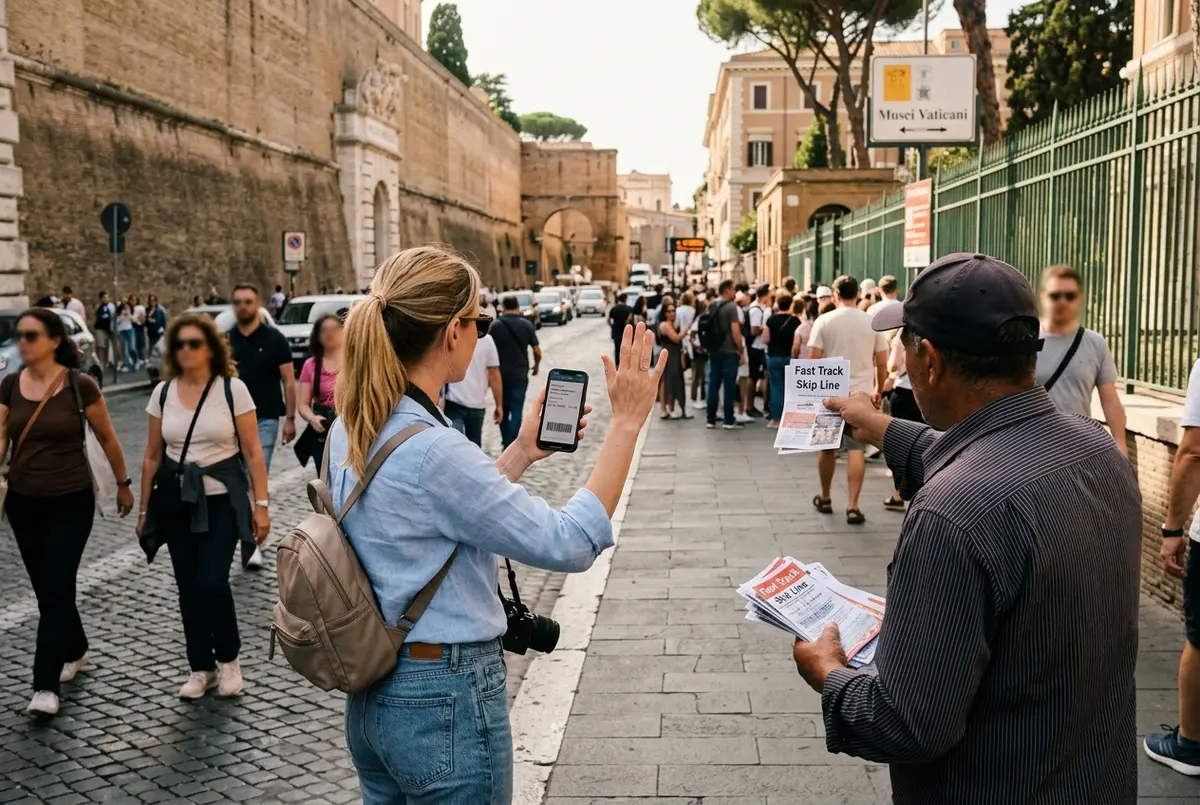
Vatican ticket scams are real, and they cluster around exactly the moment travelers are most vulnerable to them: standing outside a wall, tired, unsure of the queue, and approached by someone offering an easy fix. Here’s what I’d do about it before I ever left home: know the three patterns in advance, verify any site before entering payment details, and treat every unsolicited offer near the entrance as a hard no. The scams themselves aren’t especially sophisticated once you know what to look for, which is exactly why this page exists.
What’s the most common Vatican ticket scam?
Street vendors near the museum walls claiming they can get you in immediately, skipping the “hours-long line,” for cash. There usually isn’t a line that long at that moment, and what they’re selling is either overpriced, fake, or a group tour you didn’t ask for and can’t verify.
I would walk past anyone approaching you on the street with a ticket offer, full stop. Legitimate providers don’t work this way. They sell online, in advance, with a confirmation email and a named company behind it, not a stranger with a lanyard flagging down tourists on the sidewalk.
How do lookalike ticket websites work?
They copy the visual language of the official Vatican Museums site or a well-known provider closely enough to pass a quick glance, using a domain name that’s one letter off from the real one. You book, pay, and either get nothing or a voucher that doesn’t scan at the entrance.
My honest advice: check the URL character by character before you enter card details anywhere, and never click through from an ad or a social media link without confirming the domain first. If a site’s design feels slightly off, generic stock photography, awkward English, no named company in the footer, I would close the tab and book somewhere you can verify independently.
Is buying from a street vendor ever a good idea?
No, I wouldn’t do it under any circumstance, even if the queue looks genuinely long and the offer sounds tempting. Vatican entry tickets are frequently tied to a specific name and time slot, and a ticket bought from a stranger on the sidewalk may not match your identity or may already be used by someone else.
The math doesn’t work in your favor here either. A legitimate reserved-entry ticket booked in advance costs roughly the same as what a street vendor typically asks for, without the risk of being turned away at security holding a ticket that doesn’t scan.
What are the warning signs of a fake booking site?
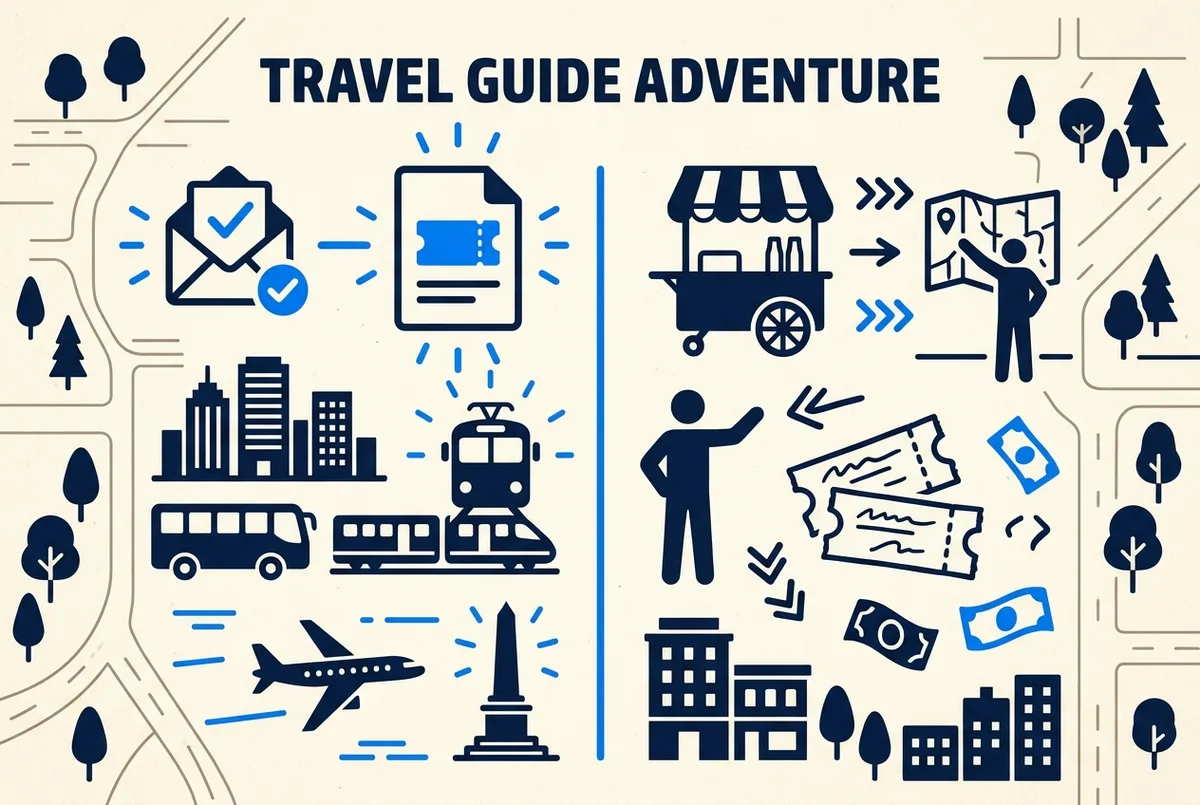
A handful of things stack up together: no clear company name or contact address anywhere on the site, prices that seem unusually low compared to every other listing, a payment page that doesn’t use a secure checkout, and reviews that are either nonexistent or suspiciously uniform.
I would treat any one of these as a caution flag and two or more as a reason to book elsewhere entirely. A real provider is easy to verify, named, with a support contact, a domain that’s been around a while, and pricing roughly in line with everyone else selling the same product.
How can you tell if a specific ticket site is legit?
Look for a physical or registered business name, a working support contact, and a checkout that shows a secure padlock and a recognizable payment processor. I’d also search the exact company name alongside the word “review” before booking anything unfamiliar.
If a site fails more than one of those checks, I wouldn’t risk it, regardless of how good the price looks. A few euros saved isn’t worth arriving at the Vatican with a ticket that doesn’t work and no way to fix it before your slot starts.
Do scammers target people who already have a ticket?
Sometimes, yes. A common variation involves someone near the entrance claiming your printed ticket “won’t scan” and offering to sell you a “working” replacement on the spot. In reality your original ticket is usually fine, and this is a pressure tactic aimed at panicked travelers close to their entry time.
I would not hand over a working ticket or pay for a replacement based on a stranger’s claim at the gate. Go to the actual staffed entrance point and ask an official attendant if there’s a genuine issue, rather than trusting anyone outside the perimeter who approaches you first.
What should you do if you’ve already been scammed?
Report the transaction to your card issuer immediately and flag it as fraud if you paid by card, since most card networks have dispute processes for exactly this kind of situation. If you paid cash to a street vendor, unfortunately there’s rarely a way to recover it.
I’d also still try booking a legitimate ticket for the same day if your trip allows it, rather than assuming the day is lost. A reserved-entry ticket from a checked provider can often be booked same-day if slots remain, so one bad experience doesn’t have to end your visit.
What does a legitimate booking actually look like?
A confirmation email with your name, date, time slot, and a voucher or QR code, from a company whose name you can verify independently, at a price that’s in line with what other travelers report paying. That’s it. There’s nothing mysterious about a real booking.
My honest take: if the process feels rushed, pressured, or too good to be true at any point, slow down. Real providers want your business enough to make the process transparent, not urgent. A ticket seller pushing you to decide in the next sixty seconds is telling you something about themselves. When in doubt, cross-check any offer against the Vatican Museums’ own official site, which is the one channel I’d treat as automatically trustworthy.
Are third-party resellers automatically a scam?
No, and I want to be clear about that distinction, since it’s easy to lump every non-official seller into the same bucket. A checked, named reseller with a verifiable business, clear pricing and real support is a completely legitimate way to book, and often bundles something the official site doesn’t, a guide, an audio option, or St. Peter’s Basilica access.
The scam isn’t “third party” as a category. It’s unverified, anonymous, or pressured. I would judge a seller on whether I can independently confirm who they are, not on whether they happen to be the official site or a partner.
What I’d actually do before booking
Book through the official Vatican Museums site or a checked, named reserved-entry provider, well before your trip if possible, and confirm the domain before entering any payment details. Ignore every unsolicited offer near the walls, no matter how convincing the story or how long the “line” looks. If a deal seems unusually cheap or a site feels off in any way, I would close it and book elsewhere rather than gamble on a ticket that might not work. My vatican museum ticket price guide lists every format I track at its real going rate, which is a useful benchmark for spotting a price that’s suspiciously low.
For the difference between the museum’s own booking portal and a legitimate third-party partner, my page on the Vatican Museums official website versus third-party tickets breaks down exactly how the two channels differ. If your date shows as fully booked anywhere, my guide to what to do when Vatican tickets sell out covers legitimate fallback options rather than a street offer. And if you’re booking for a family, my page on Vatican tickets for kids, students and discounted entry is worth reading before you pay for extra tickets you didn’t need. For the full current lineup of vatican pass ticket options I’ve verified, the homepage is the fastest place to start.
Frequently asked questions
Are all street vendors near the Vatican scammers?
Not necessarily every single one, but I would treat any unsolicited ticket offer on the street as untrustworthy by default. There’s no reliable way to verify what you’re buying in that moment, and legitimate sellers simply don’t operate this way.
How do I know if I’m on the official Vatican Museums website?
Check that the domain matches the museum’s own published address exactly, with no extra words or misspellings, and that the site uses a secure checkout. When in doubt, search for the official site directly rather than clicking a link from an ad or message.
Can a scam ticket actually get scanned at the entrance?
Sometimes a fake or duplicate ticket does get through if security is busy, but relying on that is a bad gamble. I’d never count on a questionable ticket working. Book something verifiable instead.
Is it safe to buy Vatican tickets from a resale marketplace?
I’d be cautious. Named entry tickets tied to a specific person can fail if resold, so a general marketplace listing carries real risk compared to booking directly from a checked provider.
What’s the safest way to book last minute?
Go straight to the official site or a well-reviewed, named reserved-entry provider rather than searching broadly for “cheap Vatican tickets.” A slightly higher price from a verified source beats a bargain from an unverifiable one.